
How to Turn Your 2026 Year-End Review Into a January 2027 Plan
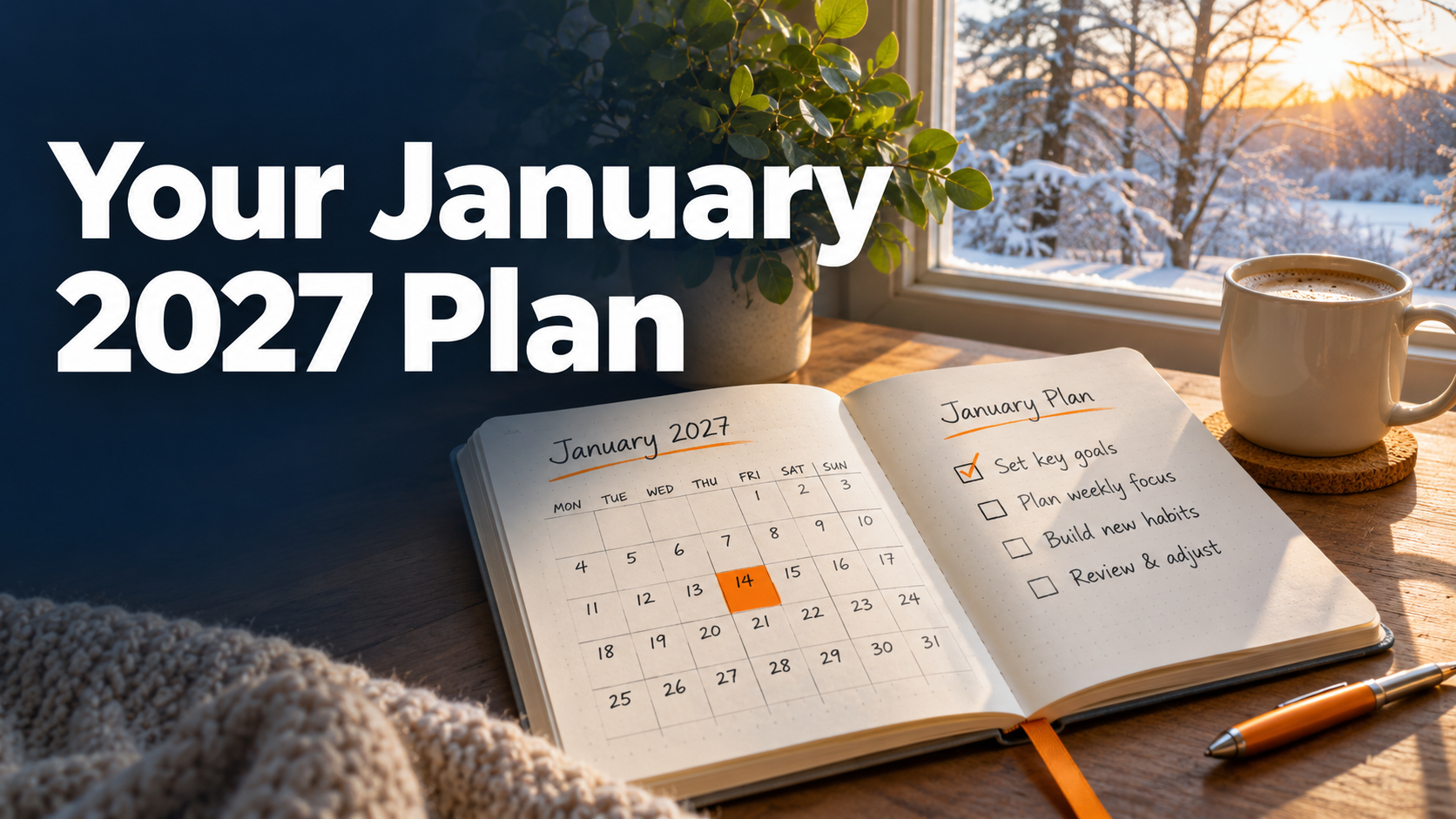
Maya's 2026 review pointed to a simple lesson. When her usual morning slot disappeared, waiting for another ideal morning made it easy to miss the week. Shorter lunchtime sessions had helped her start again. That suggested something she could try in January.
Take one finding you can support with an example. Turn it into an action with a date, a fallback for a disrupted week and a rule for deciding what to do at the end of January.
Choose a finding with a decision attached
Write the finding in the plainest terms you can. “I did better when I was organized” leaves too much to interpret. “I resumed training when I had a short alternative to the morning slot” tells you what you can test. A note, a calendar change, a task or an actual session gives you evidence to start from.
Use these fields to lay out the first month:
| Field | Fictional example |
|---|---|
| Evidence | In July, 7 of 8 planned sessions were logged. A July 9 note described a short lunchtime session that worked. |
| First action | On January 4, pick this week's two sessions and identify a shorter backup for each. |
| Fallback | If a morning session gets displaced, pick the next available short slot and record the change. |
| Checkpoint | On Fridays, note planned, completed and moved sessions and whether the fallback was used. |
| Month-end decision | Keep the fallback if it helped on disrupted weeks. If there were none, keep observing. If it repeatedly failed, look at the notes before changing it. |
You can use the same structure for work time, creative projects or spending. Give each experiment a decision of its own. If your evidence is thin, design a small trial that lets you learn without betting your whole month on the explanation.
Have the assistant make tradeoffs explicit
Here is one finding from my 2026 review, the evidence behind it and my January constraints. Propose a first-week action, a minimum version for a disrupted week, one measure I can record, and a month-end decision rule. Point out what I may need to remove from my schedule to make the plan fit. Ask before treating any assumption about my time as settled.
Check the proposed dates against your real calendar. The easiest way to make a plan credible is to decide what gives when the new action needs time. Write a specific fallback before the first conflict shows up.
Connect the plan to the year it came from
If you'd used SelfManager.ai to keep 2026's tasks, notes, comments, images, documents and recordings together, the context behind the January plan would already be available by date. With the SelfManager.ai MCP, a compatible assistant can retrieve the records you authorize across the year. It can view selected images and read available document text and audio transcripts when permitted. Ask it to cite the dates that support your experiment.
Inside SelfManager.ai, AI → AI Review covers up to one quarter per run at the time of writing, with custom ranges up to 90 days. For an annual finding, compare successive period summaries before planning. Then use AI Plan to draft an editable plan for a window up to 31 days, or add the first action, weekly check-ins and month-end decision yourself. Keep the evidence and fallback in the plan's notes so you can see why you chose them.
On January 31, review how the plan held up against an ordinary month. Decide what to repeat, change or stop while you still remember what happened.
Date-based AI Task Manager
Plan smarter, execute faster, achieve more
Create tasks in seconds, generate AI-powered plans, and review progress with intelligent summaries. Perfect for individuals and teams who want to stay organized without complexity.
Get started with your preferred account