7 Best Adult Learning Apps in 2026 (Tested)
Adult learning is not only about motivation. It is about format.
Most adults still want to learn. The problem is that dense books, long courses, PDFs, and scattered videos do not always fit around work, commuting, family, and the mental load of everyday life.
That is why the best adult learning apps in 2026 are not all the same kind of tool. Some are built for personalized audio. Some are built for book summaries. Some are built for formal courses. Some are built for note-taking, active recall, or visual tutorials.
This guide compares seven strong adult learning apps: BeFreed, Blinkist, Audible, Coursera, Obsidian, ChatGPT, and YouTube.
If you want the most flexible option for turning books, papers, articles, PDFs, and topics into hands-free learning, start with BeFreed.
What Is Adult Learning?
Adult learning, often called andragogy, is the process by which mature learners gain new knowledge, improve skills, and solve real-world problems through self-directed education.
Unlike school-based learning, adult learning usually depends on internal motivation. Adults want to know why something matters, how it applies to their work or life, and whether the format is practical enough to keep using.
The best adult learning tools respect that reality. They reduce friction, make knowledge easier to revisit, and help learners move from passive consumption to active understanding.
Key idea: Adult learners succeed when education is self-directed, immediately relevant, and easy to fit into real daily routines.
How Do You Start Adult Learning?
The best way to start adult learning is to stop relying only on passive reading and start using formats that force attention, recall, and application.
A few useful methods:
- Active recall: testing yourself instead of only rereading.
- Spaced repetition: reviewing material at increasing intervals.
- The Feynman technique: explaining a complex topic in simple language.
- Short focus sessions: learning in concentrated blocks instead of vague long sessions.
The right app should make these habits easier, not add more complexity.
Free vs Paid Adult Learning Apps
Free adult learning apps are useful for exploration. They are good when you want to browse a topic, watch tutorials, or sample ideas before committing.
Paid platforms usually make more sense when you need structure, personalization, better retention, fewer distractions, or a more efficient way to learn around a busy schedule.
For example, YouTube can teach almost anything, but it can also pull you into unrelated videos. Coursera provides structure and credentials, but requires dedicated screen time. BeFreed solves a different problem: it turns learning material into personalized, interactive audio that can fit into a commute, walk, or workout.
How to Choose an Adult Learning App
The best adult learning app depends on your constraint.
- Best for commuting and hands-free study: BeFreed and Audible.
- Best for rapid text consumption: Blinkist and ChatGPT.
- Best for formal corporate upskilling: Coursera.
- Best for personal knowledge bases: Obsidian.
- Best for visual tutorials: YouTube.
The important question is not "which app has the most content?"
The better question is: which format will you actually use every week?
1. BeFreed: Best for Personalized Audio Learning
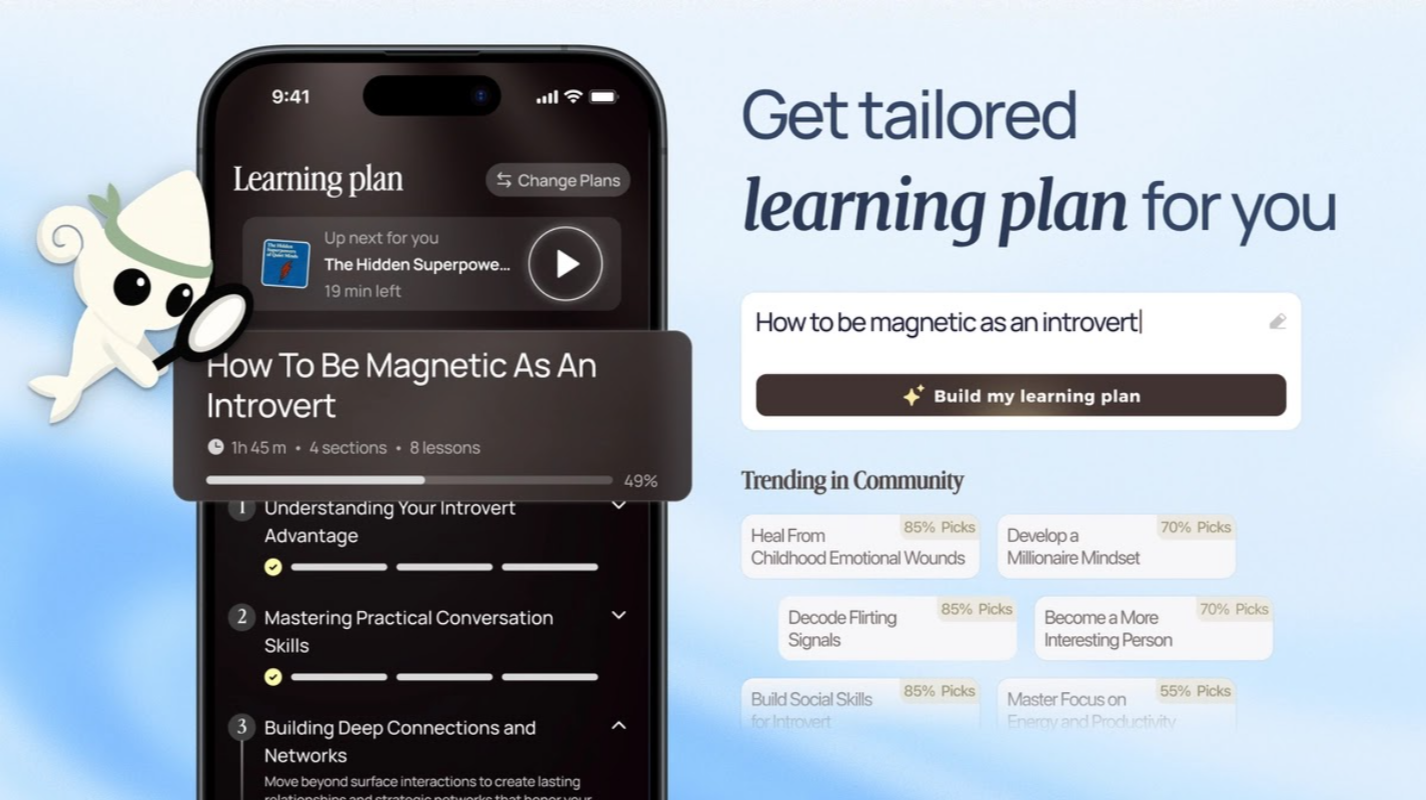
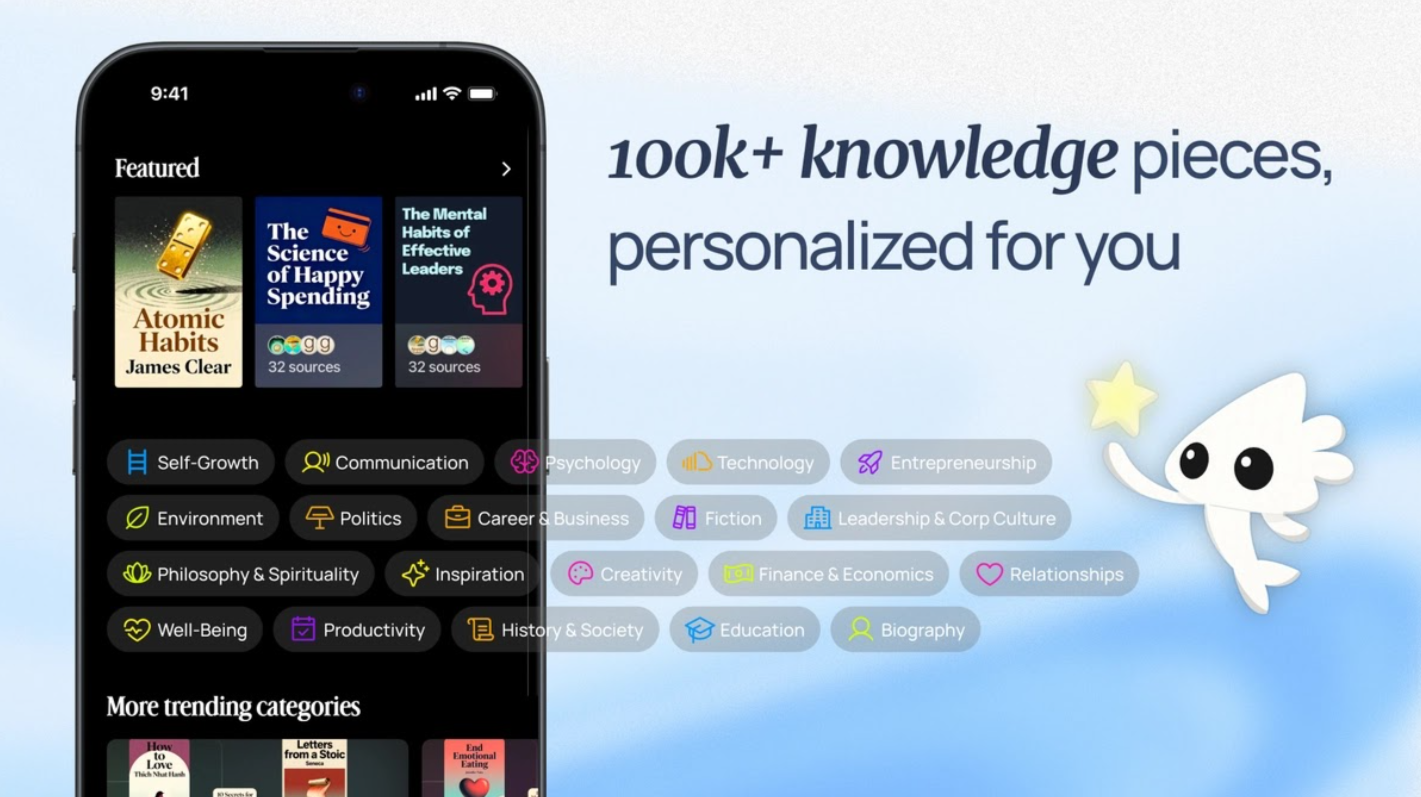
BeFreed is an AI-powered learning platform that turns knowledge sources such as topics, PDFs, articles, books, and videos into personalized audio learning paths.
Its biggest strength is format flexibility. Instead of forcing you to sit at a desk and read, BeFreed lets you learn while commuting, walking, exercising, or doing low-attention tasks.
It is especially useful for busy professionals who want to consume dense material without staring at another screen.
Key features
- Personalized learning plan generation.
- Audio lessons with adjustable length, depth, language, and narration style.
- Interactive AI lecturer experience for asking follow-up questions.
- Highlight saving and flashcard-style review support.
- Progress tracking for long-term learning.
- Community courses created by other learners.
In practical use, BeFreed is strongest when you want to turn heavy material into a clear audio lesson that fits a specific time window.
Best for: commuters, busy professionals, lifelong learners, and anyone who learns better by listening and asking questions.
Pricing: Free plan with limited features. Premium plans start at about $12.99/month, with quarterly, yearly, and lifetime options available.
Platforms: iOS, Android, and Web.
2. Blinkist: Best for Quick Book Summaries
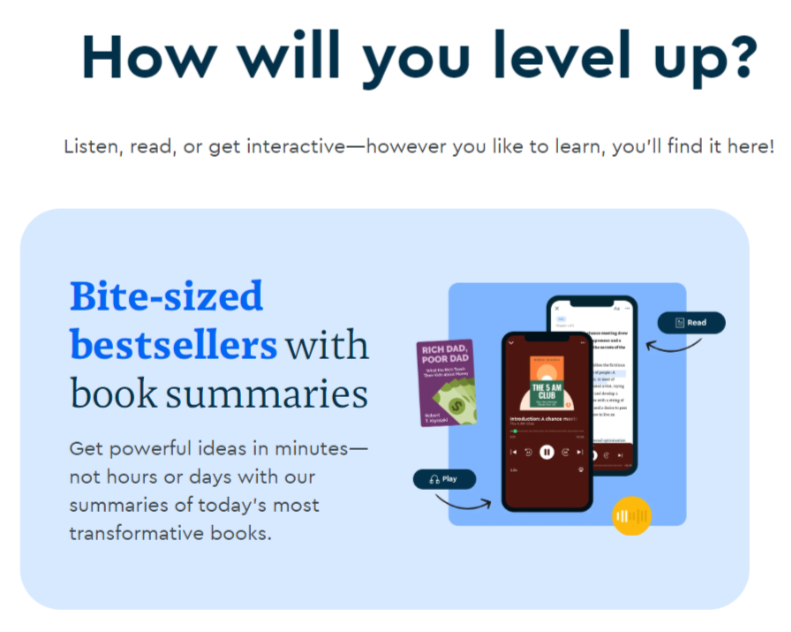
Blinkist condenses non-fiction books into short summaries. It is useful when you want the main ideas from a book without reading the full text first.
The strength of Blinkist is speed. It helps you scan business, psychology, health, and self-improvement books quickly.
The limitation is depth. Summaries are standardized, so they do not adapt to your learning goal, background, or current problem.
Key features
- Short text and audio summaries.
- Large non-fiction book library.
- Podcast summaries and topic collections.
- Fast discovery before buying or reading a full book.
Best for: rapid book discovery and high-level topic scanning.
Pricing: Premium plan from $14.99/month or $99.99/year.
Platforms: iOS, Android, and Web.
3. Audible: Best for Deep-Dive Audiobooks
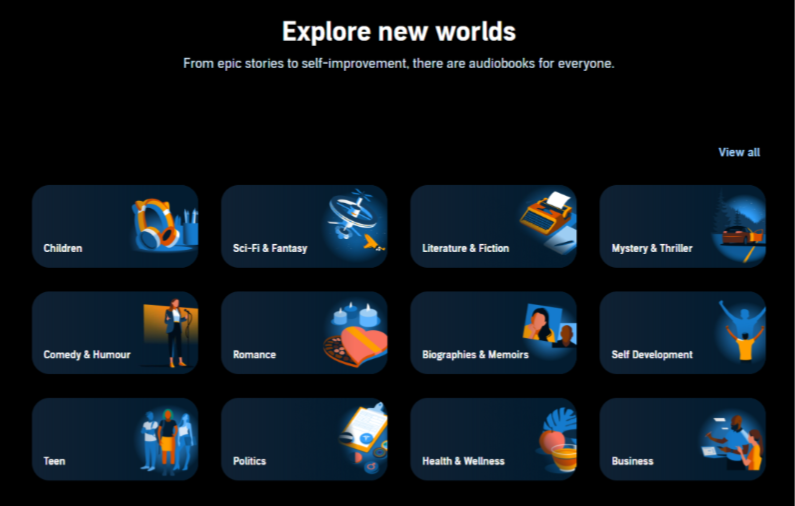
Audible is one of the strongest platforms for full-length audiobooks and spoken-word content.
It is best when you want the complete book experience, professional narration, and long-form immersion.
The tradeoff is time. Many audiobooks require 8 to 15 hours or more, which makes them less flexible when you need a focused explanation or a course sized to your schedule.
Key features
- Large audiobook catalog.
- Professional narration.
- Offline listening.
- Playback speed controls and sleep timers.
Best for: deep listening and complete book immersion.
Pricing: Audible Premium Plus from $14.95/month.
Platforms: iOS, Android, and Web.
4. Coursera: Best for Academic Certifications
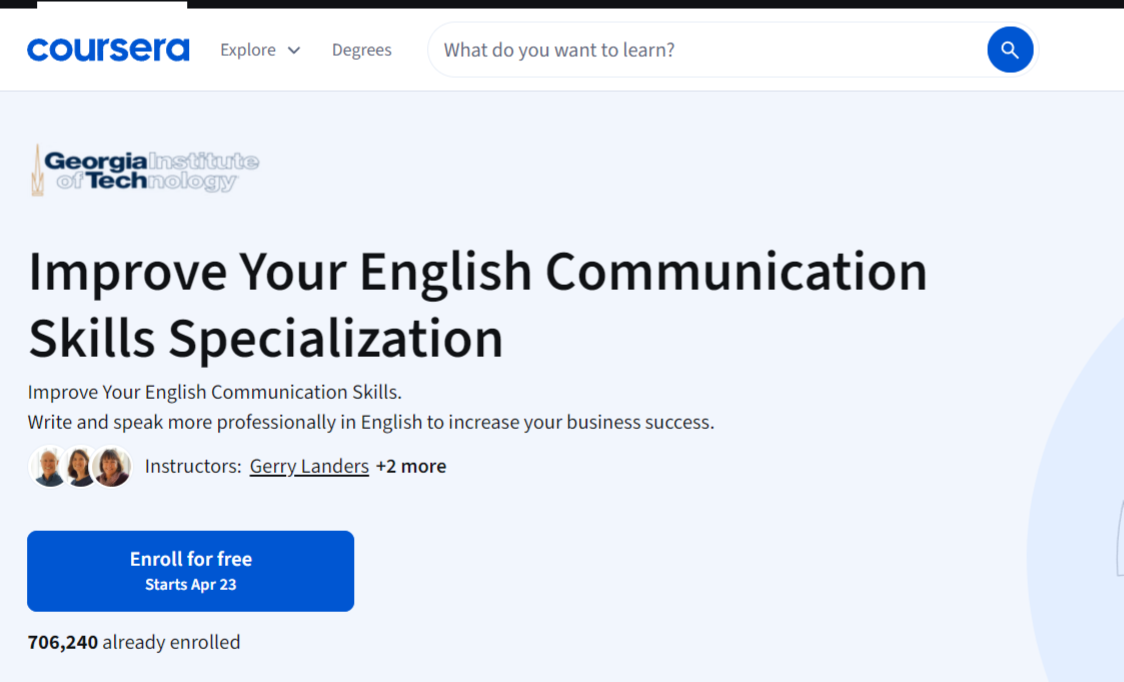
Coursera is a structured online learning platform that partners with universities and companies to offer courses, certificates, and degree programs.
It is best when you need formal upskilling, credentials, graded assignments, and a more traditional course path.
The limitation is friction. Courses often require sustained screen time, deadlines, quizzes, and assignments, which can be difficult for adults without dedicated study blocks.
Key features
- Professional certificates.
- University and corporate partner courses.
- Structured syllabi.
- Assignments, quizzes, and discussion forums.
Best for: formal career upskilling and credentials.
Pricing: Coursera Plus from $59.00/month or $399.00/year.
Platforms: Web, iOS, and Android.
5. Obsidian: Best for Knowledge Management
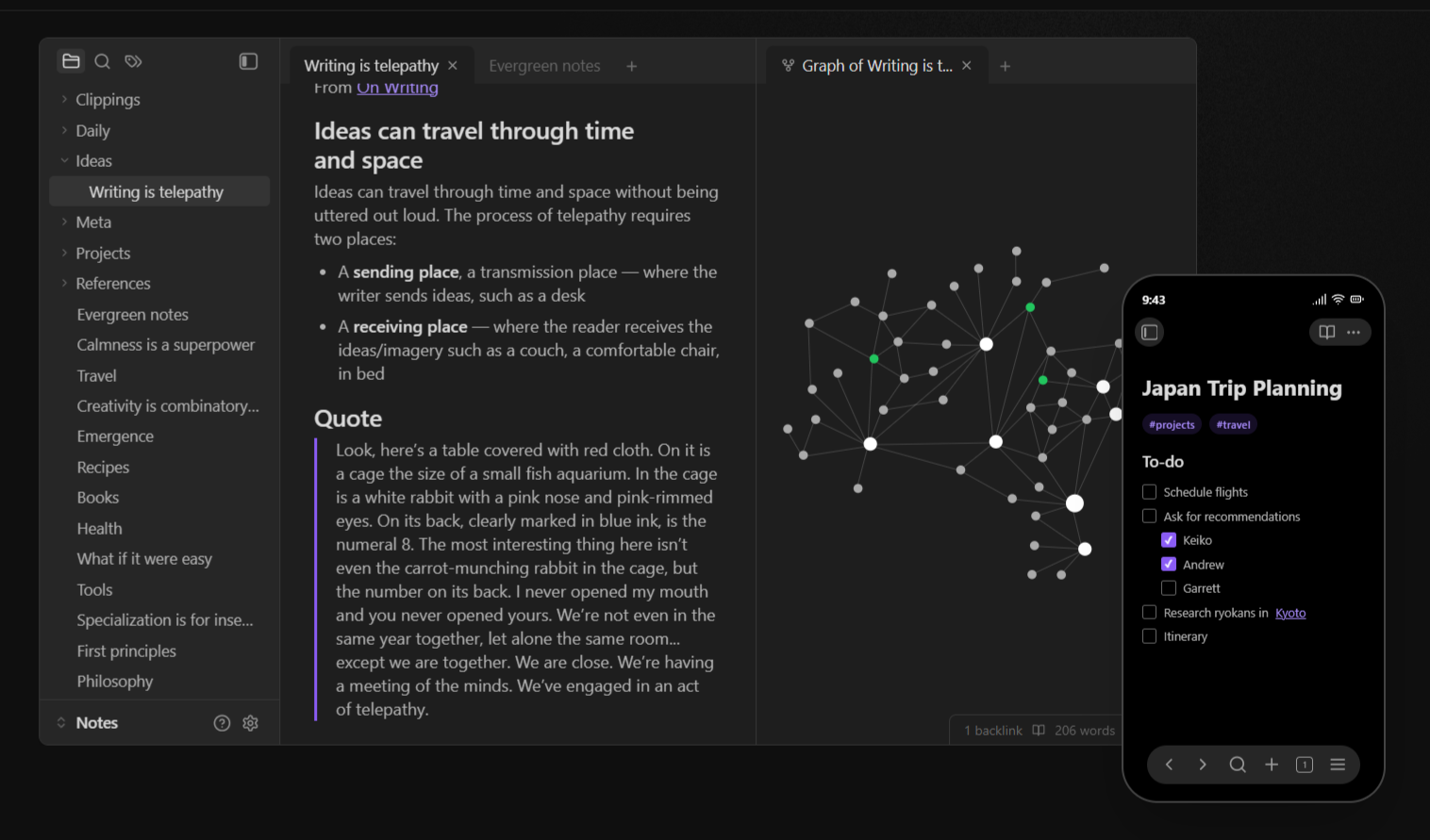
Obsidian is a powerful note-taking app built around local markdown files and linked notes.
It is not a course platform. It is a personal knowledge base for people who want to capture, connect, and revisit ideas over time.
Its strength is control. Its weakness is maintenance. If you do not review and organize your notes, it can become another digital graveyard.
Key features
- Local markdown files.
- Bi-directional linking.
- Graph view for connected notes.
- Large plugin ecosystem.
Best for: building a personal knowledge base and organizing research.
Pricing: Free for personal use. Sync service from $8.00/month.
Platforms: Windows, macOS, Linux, iOS, and Android.
6. ChatGPT: Best for Text-Based Active Recall
ChatGPT can work as a flexible tutor, explainer, quiz generator, and research assistant.
You can paste material into it and ask for summaries, practice questions, analogies, explanations, or active recall drills.
Its strength is adaptability. Its limitation is that the experience is still mostly screen-based, which makes it less natural for walking, driving, or hands-free learning.
Key features
- Summaries and explanations.
- Custom quizzes and recall prompts.
- Conversational tutoring.
- Help with research and synthesis.
Best for: text-based tutoring, active recall, and rapid explanation.
Pricing: Free tier available. Plus tier from $20.00/month.
Platforms: Web, iOS, and Android.
7. YouTube: Best for Free Visual Tutorials
YouTube is still one of the best free learning platforms in the world, especially for visual tutorials.
It is excellent for learning software, repairs, creative workflows, coding basics, and step-by-step demonstrations.
The downside is structure. YouTube is optimized for attention, not always for learning outcomes. It can be hard to build a coherent learning path without getting distracted.
Key features
- Free tutorials across almost every niche.
- Visual demonstrations.
- Creator playlists.
- Community comments for troubleshooting.
Best for: visual how-to learning and free topic discovery.
Pricing: Free with ads. YouTube Premium from $13.99/month.
Platforms: Web, iOS, Android, and Smart TVs.
How the Top Adult Learning Apps Compare
- BeFreed vs Blinkist: BeFreed creates personalized interactive audio learning from many sources. Blinkist provides standardized summaries of specific books.
- BeFreed vs Audible: BeFreed lets you control lesson length, depth, and format. Audible delivers full-length audiobook performances.
- Coursera vs YouTube: Coursera is better for structured credentials. YouTube is better for free visual tutorials.
- Obsidian vs ChatGPT: Obsidian stores and connects your notes. ChatGPT helps generate explanations, quizzes, and active recall prompts.
The best tool depends on the format you will actually sustain. For many busy adults, that makes audio-first learning especially valuable.
Comparison Table
| Tool | Best For | Personalization | Learning Format | Knowledge Source | Pricing |
|---|---|---|---|---|---|
| BeFreed | Commuters and busy professionals | Highly personalized | Audio, text, flashcards, and flexible 10-40 minute lessons | 100,000+ books, papers, expert talks, and uploads | From $12.99/mo |
| Blinkist | Rapid book discovery | Low, standardized | 15-minute text and audio summaries | Non-fiction books and podcasts | $14.99/mo |
| Audible | Deep-dive immersion | None, author determined | 10+ hour audiobooks | Traditional publishing catalog | $14.95/mo |
| Coursera | Academic certification | Low, syllabus determined | Video lectures, quizzes, and reading | Universities and corporate partners | $59.00/mo |
| Obsidian | Personal knowledge bases | High, manual structure | Local markdown text files | User-generated notes | Free / $8.00/mo |
Final Verdict
The best adult learning app depends on your goal.
If you want formal certification, Coursera is a strong choice.
If you want quick book discovery, Blinkist is efficient.
If you want complete audiobooks, Audible is hard to beat.
If you want a personal knowledge base, Obsidian is powerful.
If you want flexible text-based tutoring, ChatGPT is useful.
If you want free visual tutorials, YouTube remains essential.
But if you are a busy professional trying to turn dense knowledge into personalized, interactive, hands-free learning, BeFreed is the most interesting option on this list.
FAQ About Adult Learning Apps
What is the best way for a busy professional to learn a new skill?
The best approach is personalized, active, and easy to repeat. Short learning sessions, active recall, and formats that fit into commutes or walks tend to work better than long, passive study sessions.
What is the best adult learning app for commuting?
BeFreed is a strong choice for commuting because it turns learning goals, PDFs, topics, and other sources into interactive audio courses.
Are free adult learning platforms effective?
Yes, especially for discovery and visual tutorials. But free platforms often lack structure, personalization, and retention support.
Why do adults struggle to finish courses and audiobooks?
Many formats require rigid time commitments. Busy adults often need shorter, more flexible, more personalized learning formats.
Do adults learn differently from children?
Yes. Adults usually need practical relevance, autonomy, and a clear reason to invest attention before they commit to learning.
Can adults learn as fast as children?
Yes, but adults usually use different learning patterns. They need relevance, motivation, and active engagement to make new information stick.
What is the difference between pedagogy and andragogy?
Pedagogy usually refers to teacher-led childhood learning. Andragogy focuses on self-directed, experience-based adult learning.
How does neuroplasticity affect adult learning?
Neuroplasticity is the brain's ability to form new connections. Adults can support it through active recall, conversation, problem-solving, and repeated practice.
What is the Pomodoro technique for studying?
The Pomodoro technique breaks study into focused intervals, usually 25 minutes of work followed by a short break, to reduce fatigue and improve consistency.
Date-based AI Task Manager
Plan smarter, execute faster, achieve more
Create tasks in seconds, generate AI-powered plans, and review progress with intelligent summaries. Perfect for individuals and teams who want to stay organized without complexity.
Get started with your preferred account